
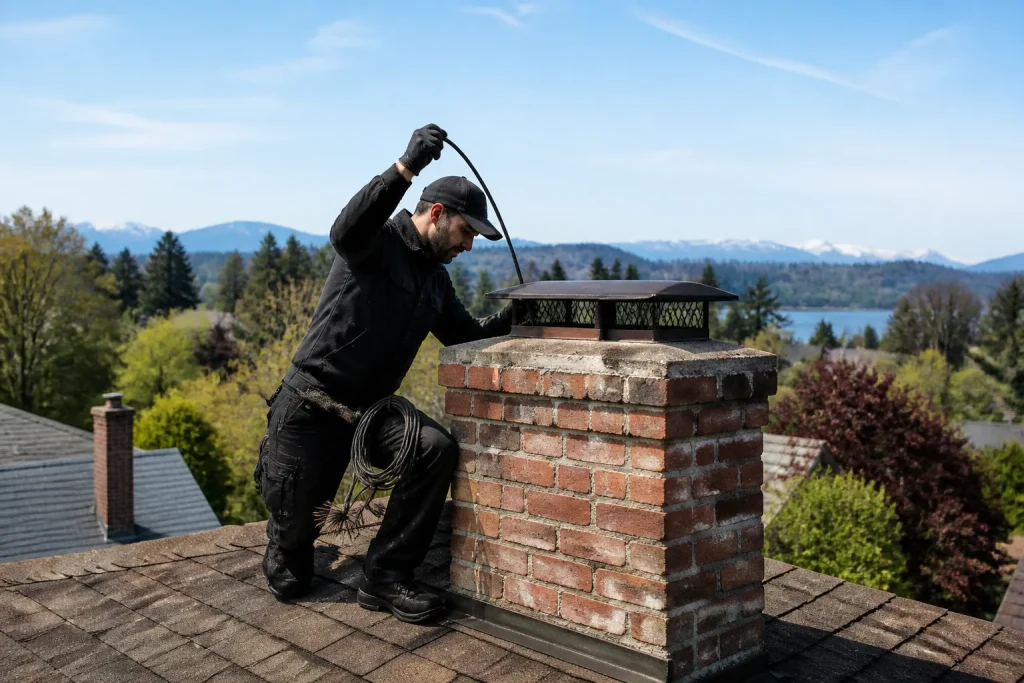
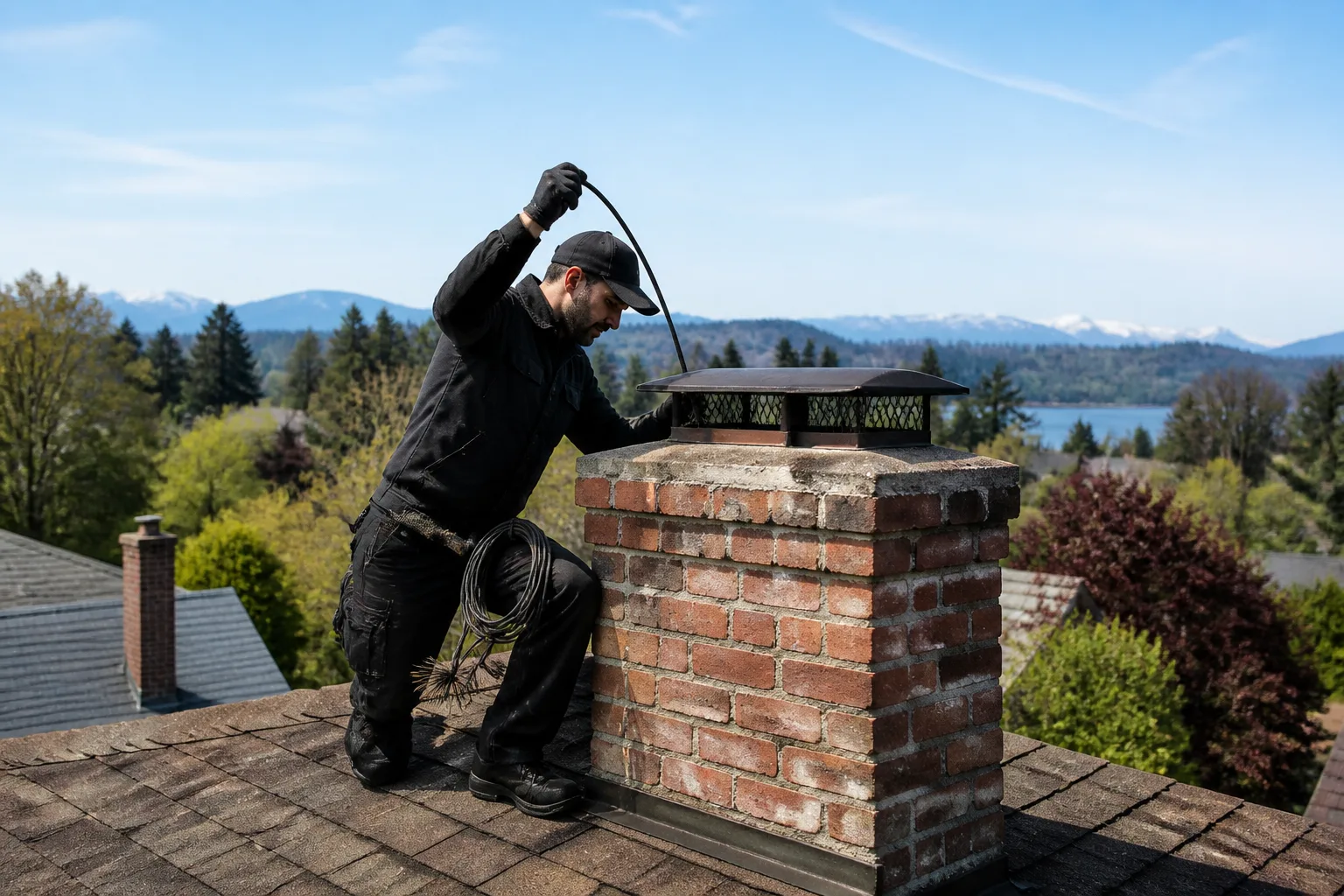
HeatShield Chimney Sweep in Northwood: A Homeowner’s Guide
Most homeowners who call about HeatShield have already been quoted a full liner replacement somewhere else. That’s backward. HeatShield is a resurfacing system, and it’s the correct answer for a specific range of flue damage, not a stopgap and not a sales upgrade. Understand which category your chimney falls into and you’ll know whether the liner quote in front of you is genuinely necessary or whether a resurfaced flue would do the same job for meaningfully less.
What HeatShield actually is (and what it isn’t)
HeatShield is a refractory resurfacing material applied directly to the inside of a clay-tile flue. It isn’t a coating, a sealer, or a patch slapped over a crack. Applied correctly, it forms a new smooth, heat-rated surface bonded to the existing tile, restoring the flue’s ability to contain combustion gases.
The distinction matters because HeatShield sits in the middle of the repair spectrum. A sweep-only company may not offer it. A liner installer may skip straight past it. But a flue with the right damage profile is a HeatShield candidate, and that’s where homeowners save real money compared with a full reline.
What HeatShield can address:
- Deteriorated mortar joints between clay tiles, the most common finding in older Northwood homes
- Minor spalling where the tile face has begun to flake
- Hairline cracks in individual tiles that haven’t broken the tile’s structure
- A flue that’s sound in shape but rough, pitted, or losing its gas-tight integrity
What it cannot fix, and where we won’t sell it:
- Collapsed or shifted flue sections
- Full tile failure, where tiles are cracked through, missing, or displaced
- Flues with structural damage to the surrounding masonry
- Chimneys with no viable clay liner to bond to in the first place
If any of those are present, a DuraFlex liner is the correct answer. HeatShield needs a sound substrate; a liner replaces the flue pathway entirely. Getting this fork right is the whole game. A chimney with the right damage profile is a candidate for HeatShield, and that’s where homeowners avoid paying for a full reline when resurfacing is structurally appropriate.
What a HeatShield application involves, step by step
The process isn’t instant, and anyone who tells you it is hasn’t done it. Here’s how a typical HeatShield job runs in Northwood, from first call to a fire in the fireplace.
- 1
Flue cleaning. Nothing gets applied to a dirty flue. We sweep first so the material bonds to tile, not to soot and creosote.
- 2
Camera inspection. A video scan of the full flue confirms whether HeatShield is eligible. This is the decision point. You’ll see the footage; if we recommend resurfacing, the reason is visible on the screen.
- 3
Preparation and application. The flue is prepared and the resurfacing material is applied to the interior surface, working top to bottom.
- 4
Cure period. The material needs to cure before the fireplace is used again. Cure time depends on conditions and the depth of the application; we tell you the specific window before we start, not after.
- 5
Post-application inspection. A final camera check confirms an even, complete surface before we sign off, and you get documentation of the job.
If you want the cleaning and inspection side handled before you commit to anything, a chimney sweep and camera inspection is the starting point, and it tells you whether resurfacing is even on the table.
Why the material bond matters in Northwood’s climate
Northwood’s winters are mild, which sounds like good news for a chimney and mostly is. It also means the chimney cycles through more warm-and-cool swings than a hard-freeze climate does, and those repeated swings work on mortar joints. A flue that goes from a hot fire to cool night air and back again is flexing slightly every time, and weak joints are where that shows up first.
HeatShield’s performance depends almost entirely on how well it bonds to the existing clay tile. A properly prepared, correctly applied surface fills the mortar joints and creates a continuous, gas-tight flue wall. A rushed application over a dirty or damp flue doesn’t bond, and an unbonded coating is worse than no coating because it can spall and flake. The tile surface has to be clean, the right material has to go on at the correct thickness, and the cure has to be respected.
This is why we use HeatShield specifically rather than a generic resurfacing product. It’s the professional-grade material for this job, and it behaves predictably when the preparation is done right. Alongside it, we work with DuraFlex liners, Gelco and Famco caps, and Olympia Chimney and Copperfield components, so the flue and everything above it are matched correctly.
HeatShield vs. a full liner replacement: how to decide
This is the fork that matters, and it should be decided by camera footage, not by a sales pitch. Here’s the practical breakdown.
- Choose HeatShield when the clay tiles are intact in shape, the damage is at the joints and surface, and the flue is structurally sound. You get a restored gas-tight flue at roughly half the cost of a liner install.
- Choose a DuraFlex liner when tiles are cracked through, missing, or displaced; when there’s no usable clay liner; or when the flue has changed use, such as a new appliance that needs a differently sized flue.
- Neither until you’ve seen the camera footage. A recommendation without visible evidence is a guess, and you shouldn’t pay for a guess.
What specifically pushes a job from HeatShield to liner: through-cracks that break the tile’s structural integrity, displaced tiles that leave gaps behind the flue wall, a flue that’s partially collapsed, or a clay liner that simply isn’t there anymore. What keeps a job in the HeatShield category: joints that have eroded but tiles that hold their shape, surface spalling without deep structural loss, and hairline cracking confined to the tile face.
In our experience, a company that only installs liners will always recommend a liner, because that’s the service it has. A company that can do both has no reason to steer you wrong, and the camera makes the decision obvious either way.
Warranty, documentation, and why the paperwork matters
A proper HeatShield installation carries a warranty from the manufacturer, and that warranty is only as good as the documentation behind it. This is the part homeowners underestimate, especially when they plan to sell.
What you should receive after the job:
- The HeatShield warranty documentation, filled out with the application details
- Before-and-after camera footage or photos of the flue interior
- A record of the inspection findings that justified the resurfacing
- Clear guidance on the cure period and when the fireplace can safely be used again
Keep all of it. When you sell a home in Northwood, a buyer’s inspector will look at the chimney, and a documented, warranted HeatShield application answers the questions before they’re asked. An undocumented resurfacing job raises them.
When to call a pro (and when it can safely wait)
A chimney that drafts poorly, smells smoky when it’s not in use, or shows visible damage at the flue should be inspected before the next fire. That’s not scare-selling, it’s basic: a damaged flue doesn’t contain combustion gases the way it should, and carbon monoxide and chimney fire risk both rise when the flue is compromised.
Plenty of chimney work can wait. A slightly rough flue found during an annual inspection, with no evidence of through-cracks or joint failure, can be scheduled rather than rushed. What shouldn’t wait is a flue with visible structural damage, active drafting problems, or a recommendation made without camera evidence you’ve seen for yourself. If a company won’t show you the footage, get a second opinion.
We handle the full system: inspection, sweep, resurfacing, liner installation, fireplace repair, and chimney cap & crown work, all under one roof, so you’re not coordinating three contractors to solve one chimney. Our technicians have up to 10 years of experience, and every job is priced per job by a written estimate, free of charge.
Related services in Northwood
If you’re weighing a sweep, an inspection, or a repair, the Chimney Sweep Northwood page covers the full service range, and we’ll tell you plainly which one your chimney actually needs.
The Bottom Line
HeatShield is a resurfacing system for clay-tile flues with joint deterioration, minor spalling, and hairline cracks, and it’s roughly half the cost of a full liner when the damage profile fits. It is not a fix for collapsed sections or full tile failure, those need a DuraFlex liner. The only reliable way to know which side of that line your chimney falls on is a camera inspection you can watch. Get the footage, get the recommendation in writing, and keep the warranty and inspection records.
If you’re in Northwood and need help, Chimney Sweep Northwood offers free estimates. Call (855) 337-2036. We answer 24/7. Fast dispatch from 7am to 7pm, Sunday through Friday.
Frequently Asked Questions
It’s not a replacement for a liner and isn’t meant to be. HeatShield restores a structurally sound clay-tile flue by resurfacing the interior, while a DuraFlex liner creates a new flue pathway entirely. If tiles are cracked through, displaced, or missing, a liner is the correct fix and HeatShield won’t hold. Call (855) 337-2036 for an exact quote; estimates are free.
You’ll get a specific cure window before the work starts, and it depends on the application depth and conditions at the time. The cure is part of the job, not an inconvenience to rush, because using the fireplace too soon can compromise the bond between the resurfacing material and the tile. Call (855) 337-2036 to book an inspection and get a timeline for your flue.
HeatShield resurfacing typically runs at roughly half the cost of a full reline, but the exact figure is set by the written estimate after we’ve seen the flue. The price depends on the length of the flue, the extent of joint deterioration, and how much preparation the surface needs. Nothing is recommended without camera evidence you can see for yourself. Call (855) 337-2036 for an exact quote; estimates are free.
You need a liner if the camera shows through-cracks, displaced or missing tiles, a collapsed section, or no viable clay liner. You don’t need one if the damage is confined to mortar joints and surface spalling on otherwise sound tiles, which is a HeatShield job. Ask to watch the camera inspection footage, and if a company won’t show it, get a second opinion before you commit. Call (855) 337-2036 to book a camera inspection.
Written by the team at Chimney Sweep Northwood.
Need Chimney Cleaning Help?
Call Chimney Sweep Northwood - the local pro we connect you with is licensed and insured, with free written estimates in Northwood.
(855) 337-2036