
Last updated November 24, 2026
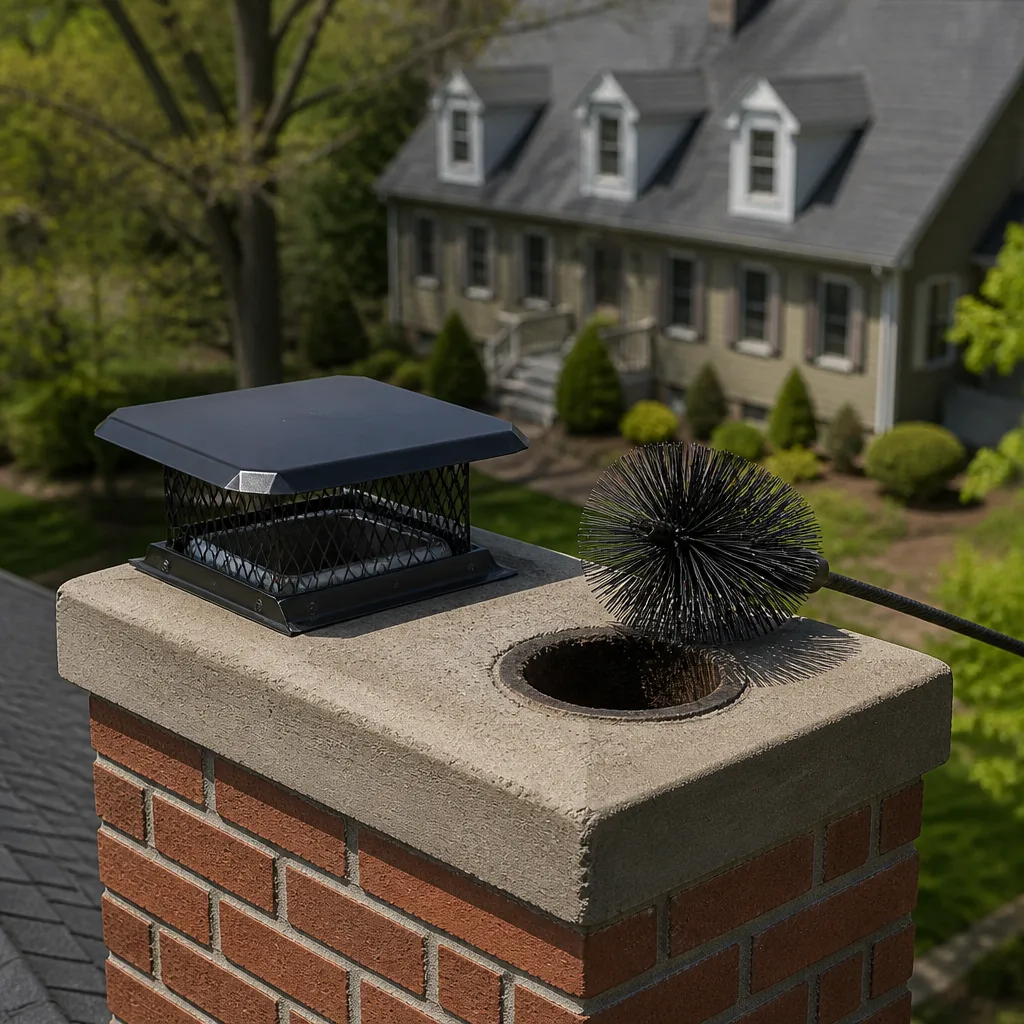 Sweep & inspection
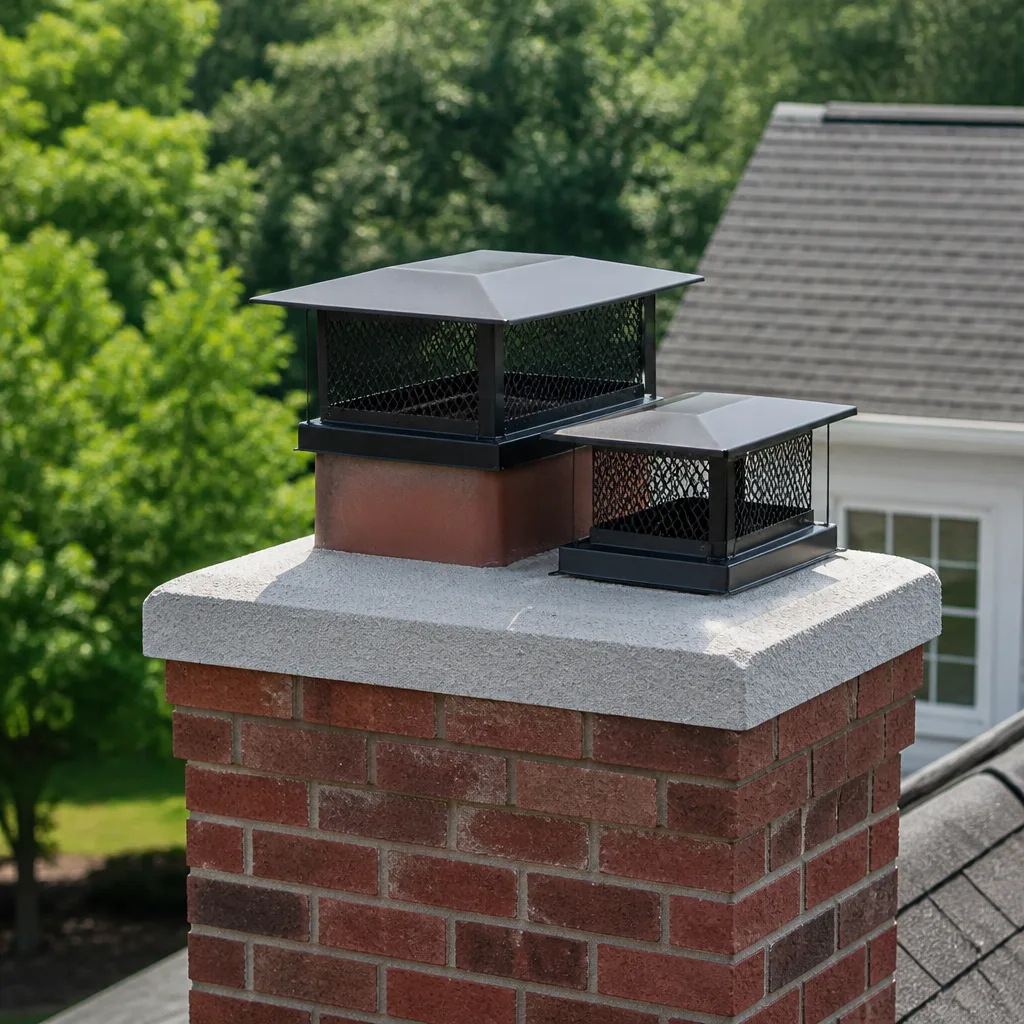 Caps & crowns
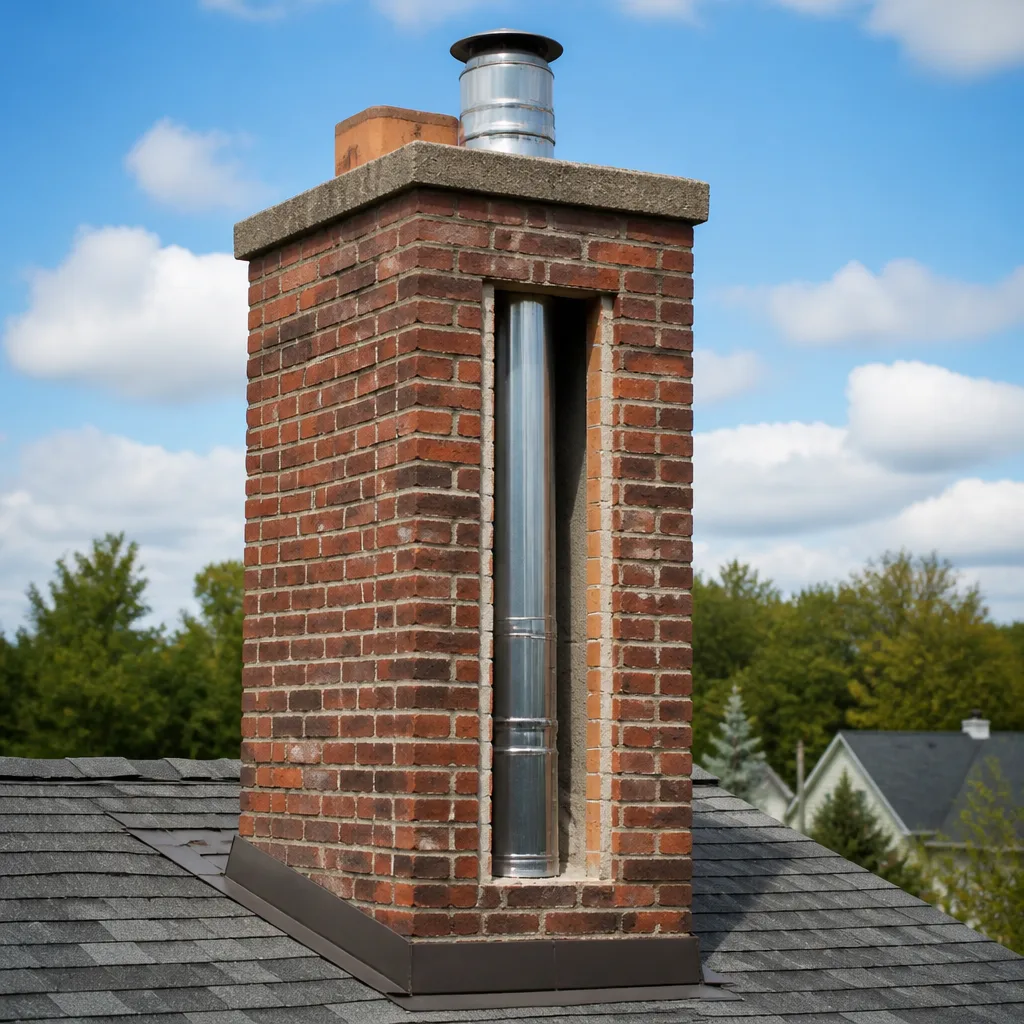 Flue relining
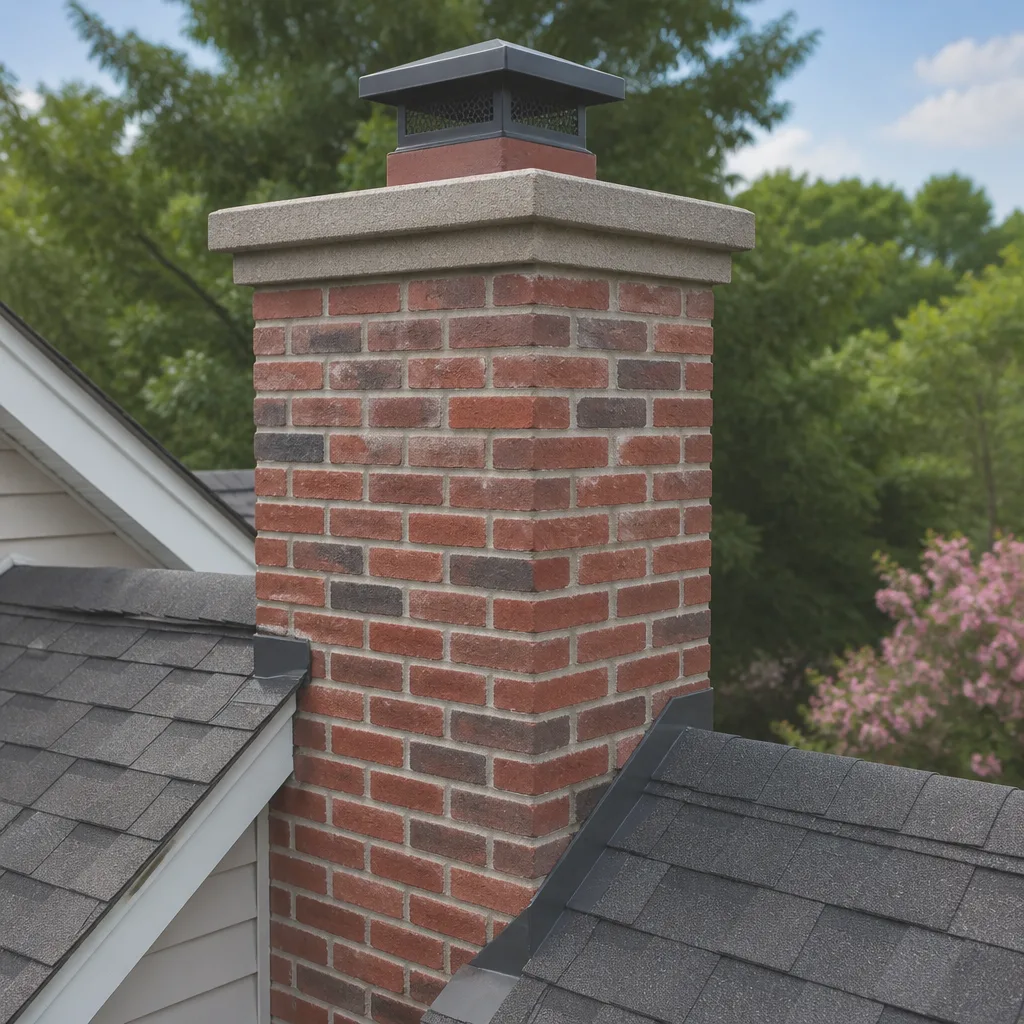 Masonry repair
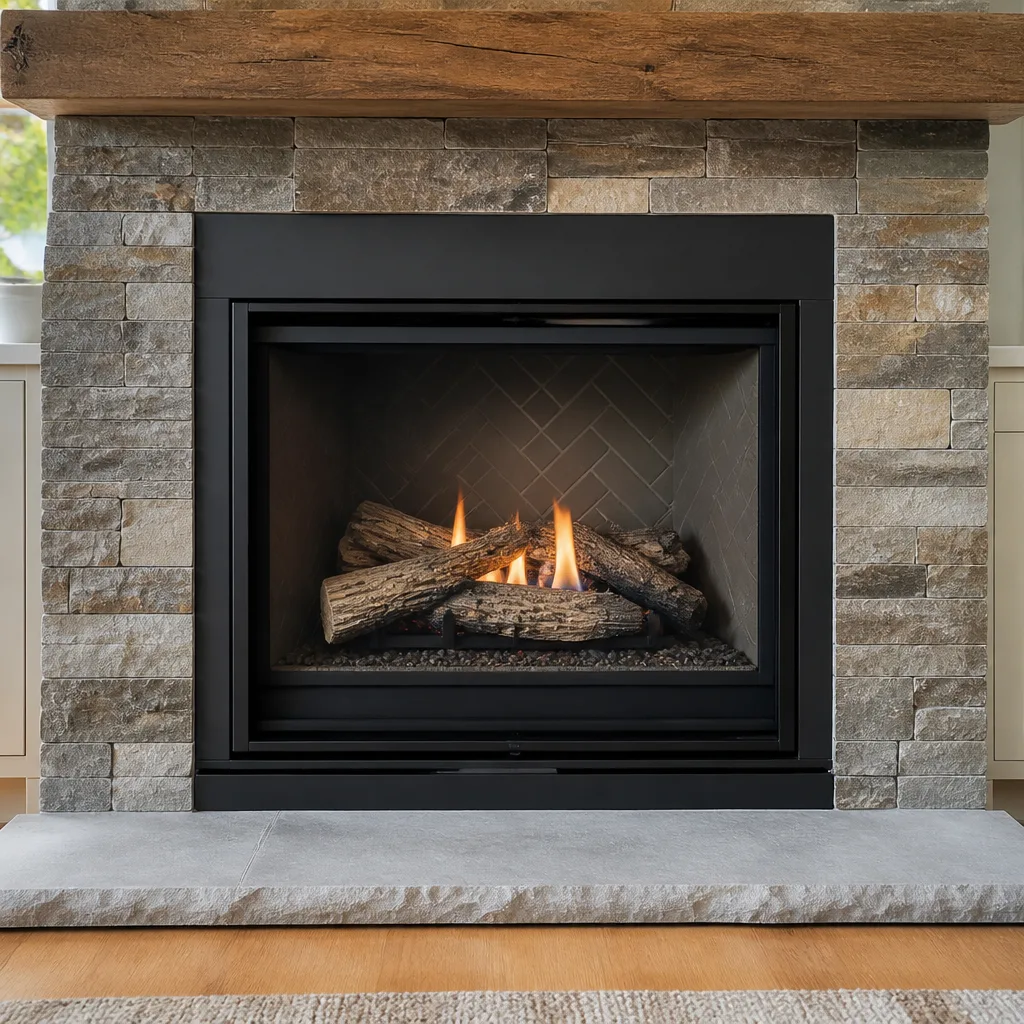 Gas fireplace service
Level 1 sweep and inspection to the NFPA 211 annual standard - flue, crown, cap, and flashing checked and photographed
Chimney sweep logs do not sweep chimneys. They loosen some creosote - which then falls where a brush and vacuum still have to collect it.
DIY vs Professional Chimney Cleaning: The Northwood Homeowner’s Decision Guide
You can buy a chimney brush kit for $40 and physically clean a flue. What you can’t buy is the ability to recognize a stage-two creosote deposit that’s about to become a glaze, or a hairline liner crack that a brush passes right over. The DIY chimney cleaning debate usually gets framed as a question of access and effort: can you reach the flue, and are you willing to spend a few hours on a ladder? That’s the wrong frame. The real line isn’t physical capability. It’s diagnostic competence. In this guide we’ll walk through what a Northwood homeowner can honestly do alone, what a consumer brush kit genuinely misses, and where a self-performed cleaning starts to cost more than it saves.
Quick Answer
Most Northwood homeowners can safely handle firebox debris removal, a visual cap and crown check, and exterior masonry surface inspection on their own. Anything that involves actually cleaning the flue interior, judging creosote stage, or confirming whether a liner is intact should go to a professional with rotary equipment and video inspection. The dividing line is diagnosis, not reach. If you can’t tell a stage-two deposit from a glaze, or a passing brush from a compromised liner, a professional sweep is the right call.
Styles & brands we work with
- Sweep & inspection
- Caps & crowns
- Flue relining
- Masonry repair
- Gas fireplace service
Table of Contents
- What You Can Legitimately Do Yourself
- What a Brush Kit Physically Can’t See
- Creosote Stages and Why They Matter
- What Professional-Grade Equipment Actually Does
- When DIY Cleaning Creates Real Liability
- California Insurance and the Documentation Problem
- A Five-Year Honest Cost Comparison
- When to Call a Professional
What You Can Legitimately Do Yourself
There are three jobs a Northwood homeowner can perform safely and usefully without professional equipment, provided they understand what each one actually accomplishes. None of them clean the flue. All of them give you better information when you do call a professional.
The first is firebox debris removal. Ash, charred wood fragments, and the occasional fallen bird nest accumulate in the firebox floor. Scooping that out with a small shovel into a metal bucket, then vacuuming the remaining dust, reduces the volume of material a sweep has to work around. It also gives you a clear look at the firebox floor and lower walls. If you see cracked firebrick or crumbling mortar joints in that lower section, stop and note it. That’s information a sweep or repair technician needs.
The second is a visual cap and crown check from the ground. With binoculars or a phone camera on a zoom setting, look at the top of the chimney from your yard. A cap should sit over the flue with a screen or louvered sides. The crown is the concrete slab at the very top. If the crown shows visible cracking, crumbling, or a chunk missing, or if the cap is tilted or absent, you’ve found something that needs repair before the next burn season. A missing or damaged cap lets water in, and in Northwood that’s more consequential than in most places because winter rain comes in concentrated bursts rather than a slow drizzle.
The third is exterior masonry surface inspection at ground level. Run your hand along the chimney’s outside face where you can reach it. Probe the mortar joints with a screwdriver. If the mortar crumbles with light pressure, it needs repointing. If you see white chalky staining, that’s efflorescence from water moving through the masonry. Note it. None of these observations require climbing anything, and all of them help a professional assess the system faster.
What none of these three tasks does is tell you anything about the inside of the flue. That’s where the real question lives.
What a Brush Kit Physically Can’t See
A consumer chimney brush kit consists of a bristle head and flexible rods you feed up the flue from the firebox. It scrapes loose soot and powdery creosote off the flue walls. That’s a real function. It is also the entire function. A brush cannot tell you what it left behind.
Here’s the specific problem. Creosote forms in three stages, and a brush handles one of them. Stage one is soot and light flaky deposits. A brush removes most of it. Stage two is a denser, crusty deposit that adheres to the flue wall. A brush can knock some of it loose but leaves a stubborn layer behind, and the layer left behind is exactly what accelerates into stage three. Stage three is glazed creosote, a hard, shiny, tar-like coating baked onto the flue. A brush passes over it. The bristles glide across the glaze and remove almost nothing.
Glazed creosote is the deposit that fuels chimney fires. It ignites at a lower temperature than the wood you’re burning in the firebox, and once it lights, it burns hot and long. A homeowner who has brushed their flue regularly can still be accumulating glaze without knowing it, because the brush gives tactile feedback only in stage one and stage two. Stage three feels smooth.
There’s a second blind spot in the same category: liner condition. A flexible brush rides up the inside of the flue and passes any crack, gap, or displaced joint in the liner without transmitting anything to your hands. A hairline crack in a clay tile liner, or a separated joint, is invisible to the brush and to anyone who doesn’t look up the flue with a camera. If that liner is compromised, a self-performed cleaning can push creosote into the gap between the tile and the surrounding masonry, which is exactly where it should never be.
In our experience, the homeowner most at risk from DIY cleaning isn’t the one who never cleans. It’s the one who cleans every year with a brush, believes the flue is fine, and has never had a camera in it. The annual ritual creates confidence the brush didn’t earn.
Creosote Stages and Why They Matter
Understanding creosote staging is the single most useful piece of knowledge you can carry into the DIY question. It’s also the piece that most often gets simplified into mush by generic chimney advice. Here’s what each stage actually looks like, and what it means for your next decision.
- Stage one: Soot and light, fluffy deposits. Black or dark gray, wipes off with a rag. Removed by routine brushing. If your flue looks like this, you’re in reasonable shape and the cleaning schedule is working.
- Stage two: Crusty, hardened flakes and chunks. Brown or black, adheres to the flue wall, and takes a scraper or a rotary tool to break loose. Removed with professional equipment. If left, it becomes the base layer for glazing.
- Stage three: Glazed, shiny, tar-like coating. Brown-black, hard, and smoothed flat against the flue. Ignites readily. Not removed by brushing. Requires specialized chemical treatment or, in severe cases, relining.
The transition from stage two to stage three is driven by heat and by burning conditions. Wet wood, cool flue temperatures, smoldering fires, and restricted draft all push creosote toward the glazed stage faster. A Northwood homeowner burning seasoned hardwood in a well-drafted fireplace with a warm flue will glaze more slowly than one burning unseasoned wood in a fireplace they light once a month in December and January. Frequency is less important than the conditions inside the firebox.
What this means practically: if your last brush cleaning produced mostly dark powdery dust, you’re likely in stage one or stage two territory. If your brush came back looking like it glided across the surface, or if you scraped at something and couldn’t move it, you’re likely looking at stage three. That’s the moment the DIY question changes. Glazed creosote is a professional problem. We carry the tools to address it through a chimney sweep and the relining capability to repair what glaze has damaged, but the first step is a camera inspection that tells us what’s actually there.
What Professional-Grade Equipment Actually Does
Professional chimney cleaning equipment differs from consumer brush kits in three ways that matter for the DIY question. None of them is about strength. All three are about seeing and controlling what the cleaning leaves behind.
Rotary cleaning systems. A rotary head spins at high speed using weighted whips or chains, and the centrifugal force presses the cleaning media against the flue wall uniformly as the head travels up and down. That uniform pressure removes stage-two crust and can break down medium glaze that a straight brush pass cannot touch. On clay tile liners, rotary equipment also reveals broken tile edges by feel and sound, which a flexible brush does not.
HEPA containment and negative air. When you clean a flue, the fine soot that comes loose is the same material that coats your furniture and gets into your lungs. Consumer brush kits come with no containment. Professional setups use sealed vacuum systems with HEPA filtration to hold soot under negative pressure while the cleaning happens, so the dust goes into a bag, not into the living room. For households with anyone who has respiratory sensitivity, this is not a nicety.
Video inspection. This is the piece that turns cleaning into diagnosis. A camera on a flexible cable goes up the flue and records what’s actually there: liner condition, joint integrity, creosote stage at every height, and any obstructions. The footage becomes documentation. It’s also how we determine whether a flue needs only cleaning, or whether it needs liner resurfacing with a product like HeatShield, or a full reline with DuraFlex. You can’t make that call from the bottom of a firebox looking up with a flashlight.
We handle the full chimney system rather than just the sweep, which changes what “professional cleaning” means in practice. A camera inspection is part of the job, not a separate upsell. When the footage shows a liner that needs resurfacing, we have the HeatShield capability to address it without sending you to a second contractor. When the cap or crown has failed, a chimney cap & crown installation with products like Olympia Chimney or Famco closes the loop. The cleaning is the starting point. The structural work is the point.
When DIY Cleaning Creates Real Liability
There are specific situations where a self-performed cleaning isn’t just less effective. It creates documented risk. If any of the following apply to your Northwood property, the DIY option should come off the table.
- You’re a landlord or renting out the property. Rental housing puts the cleaning responsibility on the property owner, and documentation matters. A professional cleaning with a written report protects you if a future tenant raises a chimney-related concern. A homeowner with a brush produces no record.
- You’ve had a chimney fire, or suspect one. A chimney fire can crack liner tiles, warp a metal liner, and damage the mortar between tiles. Cleaning after a fire without a professional inspection means you’re sweeping a compromised system and pushing debris into cracks you can’t see. Post-fire cleaning should always begin with camera inspection and a documented condition report.
- The liner is cracked, damaged, or of unknown condition. If you haven’t seen the inside of your flue with a camera, you don’t know the liner condition. Sweeping a cracked liner is the worst-case version of DIY cleaning because it drives creosote and soot into the masonry behind the tile.
- The installation history is unknown. New Northwood homeowners often inherit a chimney with no service records. Any system with an unknown history should get an inspection before anyone runs a brush through it, because the brush is only safe when the liner is confirmed intact.
- The chimney is on a wood-burning stove rather than an open fireplace. Stoves run hotter and produce different creosote profiles than open fireplaces. The flue configuration is also tighter, which means consumer equipment is less suited and diagnostic judgment matters more.
None of these situations mean the homeowner did something wrong. They mean the risk profile has changed, and the cost of a professional sweep on the front end is well below the cost of repairing damage a brush caused in the wrong flue.
California Insurance and the Documentation Problem
Insurance is the quiet part of the DIY discussion that homeowners rarely think about until it matters. If a chimney fire occurs and an insurance adjuster asks for service records, a self-performed cleaning leaves no paper trail. A professional cleaning leaves an inspection report, a camera record, and a documented condition at the time of service.
We’re not in the business of giving legal or insurance advice, and every California homeowner’s policy is different. What we can say plainly is this: damage from a chimney fire can be more involved to claim when the owner can’t show that the system was professionally inspected and maintained. A documented annual professional inspection is a piece of evidence no brush kit can produce. If the question is “was this system properly maintained,” a dated report with video footage answers it. A homeowner’s memory of sweeping the flue last October does not.
The verification works in both directions, which is why documentation has value beyond insurance. When we recommend that a flue needs liner resurfacing with HeatShield, or that a cap has failed and needs replacement, we show you the camera footage. You see the crack, the damaged crown, or the glaze on the flue wall for yourself. And when the footage shows the flue is in good shape and the right answer is simply to come back next season, we say so. Nothing gets recommended without camera evidence you can see. That principle matters whether or not insurance enters the conversation.
A Five-Year Honest Cost Comparison
The cost question usually gets answered with a single number on each side, and that’s not useful. What matters is the five-year total, including the costs that don’t appear on an invoice. We’re not going to pretend the professional route is cheaper in a given single year. It usually isn’t. But the ledger has more lines than the invoice.
A consumer brush kit typically runs somewhere in the low double digits to low triple digits depending on diameter and load, and it lasts several years. Add the value of your time at a couple of hours per cleaning, once or twice a year. Add the cost of a ladder, a shop vacuum with adequate filtration, and replacement brushes when the bristles flatten. Then add the cost that doesn’t show up on any receipt: the findings you didn’t make because no camera went up the flue. A liner crack that would have been repaired for a few hundred dollars as liner resurfacing becomes a full reline once water and creosote have done their work for a few more seasons. A damaged crown that could have been resealed becomes masonry repair.
Professional cleaning runs per job, set by a written estimate, and the estimate is free. The five-year total includes more line items per visit but fewer surprises per decade. The specific cost structure we recommend thinking about:
- Year one: professional sweep and camera inspection, establishing a baseline condition record.
- Years two through five: annual or biennial professional sweep and inspection, based on burn frequency.
- As-needed: liner resurfacing if creosote staging or liner condition shows it’s needed, before it becomes a reline.
- Preventive: cap and crown maintenance, since water ingress is the most common driver of structural chimney repair in Northwood.
The comparison flips when you account for the diagnostic findings a professional sweep delivers even when no repair is needed. You leave with a documented condition for the year, a camera record, and a clear answer about what to watch. A brush produces a dirty rag. Call (855) 337-2036 for an exact quote on your chimney, and we’ll tell you what the five-year picture looks like for your specific system. Estimates are free.
When to Call a Professional
The specific scenarios that put a Northwood chimney firmly in professional territory:
- You’ve never had a camera inspection and don’t know the liner condition.
- The brush scraped but couldn’t dislodge a hard, shiny coating on the flue wall.
- The chimney has been through a fire, or you’ve noticed a strong burning smell on a cool evening after a recent fire.
- The cap is missing or damaged, or the crown shows visible cracking.
- You burn wood in a stove, not an open fireplace.
- You’re renting the property out, or you’re buying one and need a condition assessment before closing.
- You’re noticing smoke spillage into the room, or the draft has changed noticeably from prior seasons.
Some of these can wait for the next scheduled service. The liner and glaze questions shouldn’t, because the cost of waiting is what turns a repair into a rebuild. Chimney Sweep Northwood offers free estimates in Northwood, so there’s no cost to finding out which category your chimney falls into. Call (855) 337-2036. We answer 24/7. Fast dispatch from 7am to 7pm, Sunday through Friday.
Common Mistakes to Avoid
- Trusting a brush to tell you the flue is clean. A brush only gives reliable feedback in the early creosote stages. Once glaze forms, the brush glides over it, which feels like a clean flue and isn’t one.
- Sweeping a flue with an unknown liner condition. Any Northwood home with no chimney service history should get a camera inspection before a brush goes up. Doing it in reverse order is how creosote ends up behind a broken tile.
- Cleaning after a chimney fire without a professional inspection. A fire compromises liner integrity even when the flue looks intact from below. Post-fire cleaning begins with inspection, always.
- Relying on visual inspection of the cap only from the ground when repair is needed. Getting eyes on the cap from below is useful. Deciding the crown doesn’t need work because it looked mostly fine from a zoomed phone photo is not. Water ingress from a cracked crown is the most common structural driver we see in the Northwood area.
- Skipping the sweep because the fire draw still feels strong. Draft quality is not a creosote indicator. A chimney can draft acceptably while stage-two creosote builds on the walls.
- Cleaning on a wet day or while the flue is cold. A cold flue with moist air promotes creosote adhesion. If you’re going to brush at all, do it when the flue is dry and after a warm fire, and understand what that brush is and isn’t telling you.
- Assuming a rental property’s cleaning is up to the tenant. Occupancy doesn’t transfer responsibility for the chimney system. Documentation of a professional sweep sits with the property owner. A fireplace repair after damage from an unmaintained system is the owner’s problem either way.
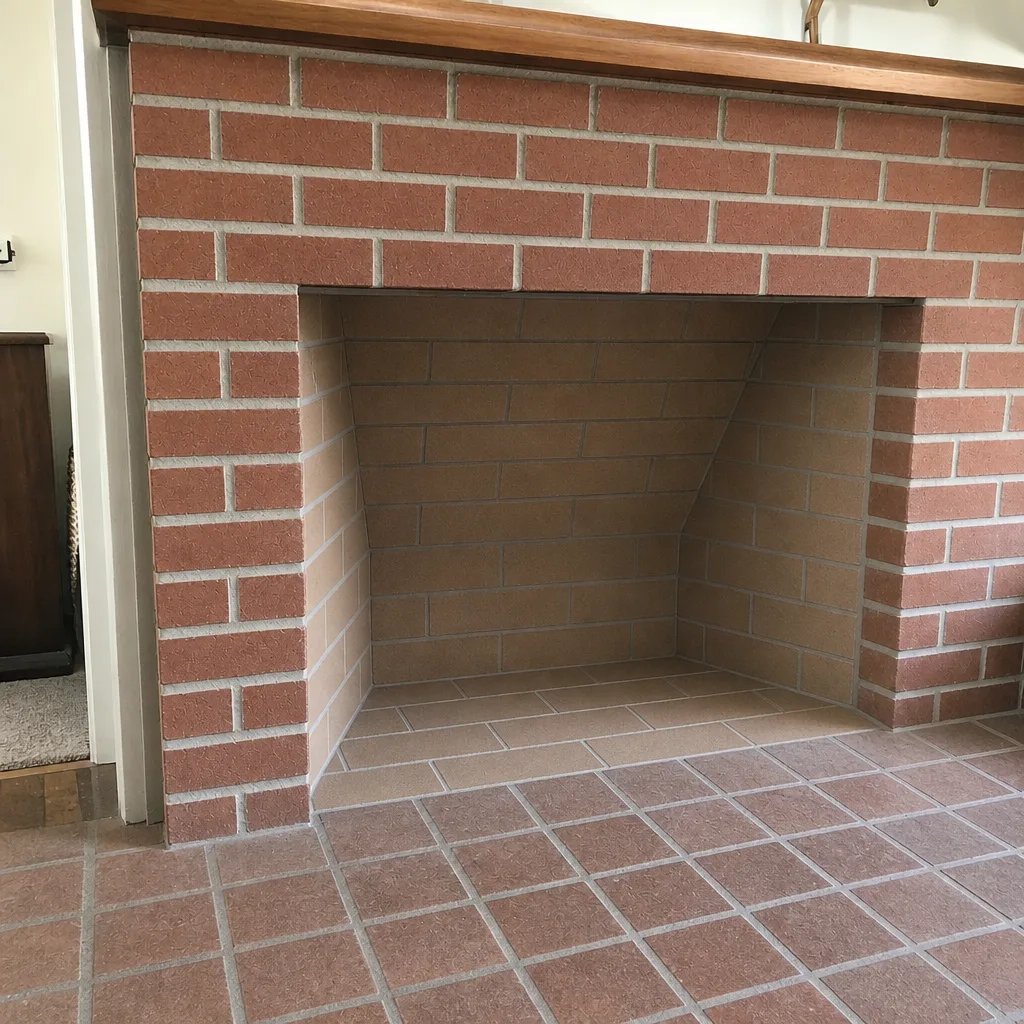
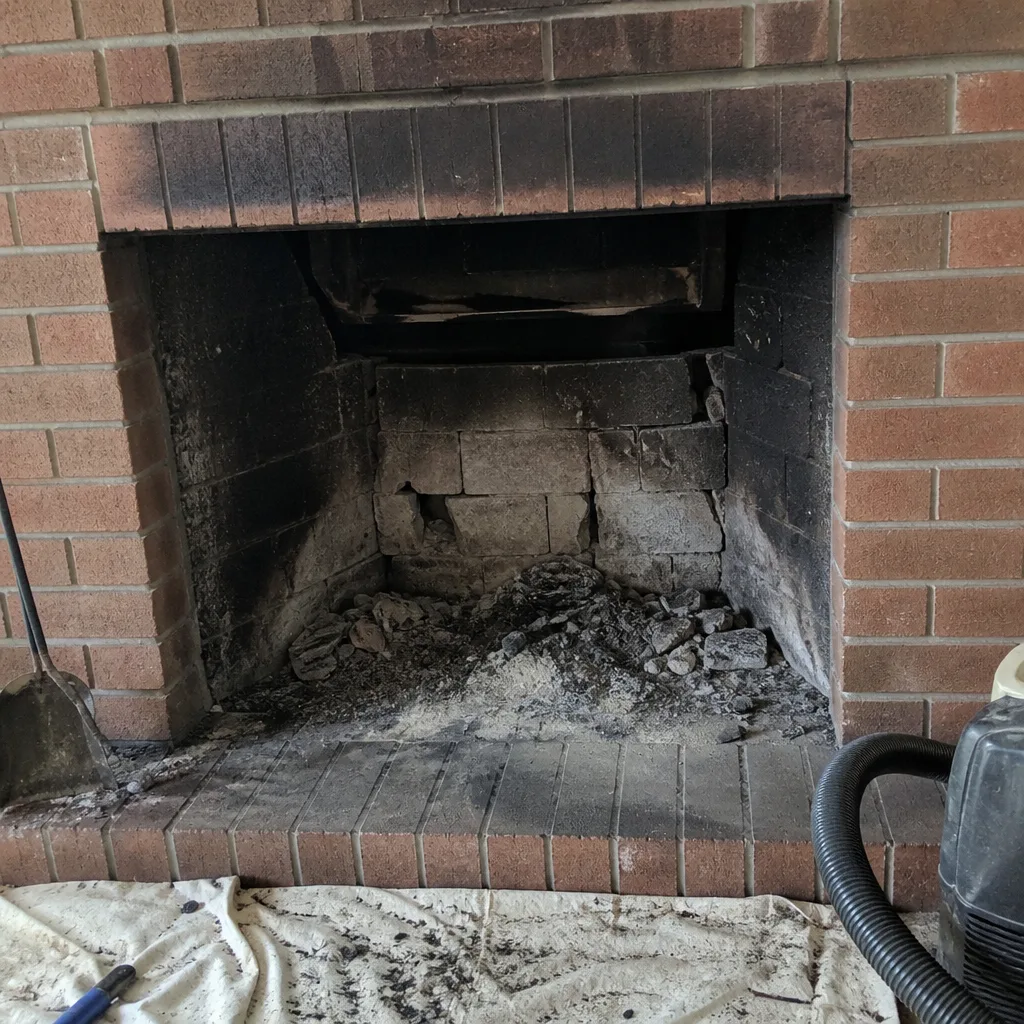
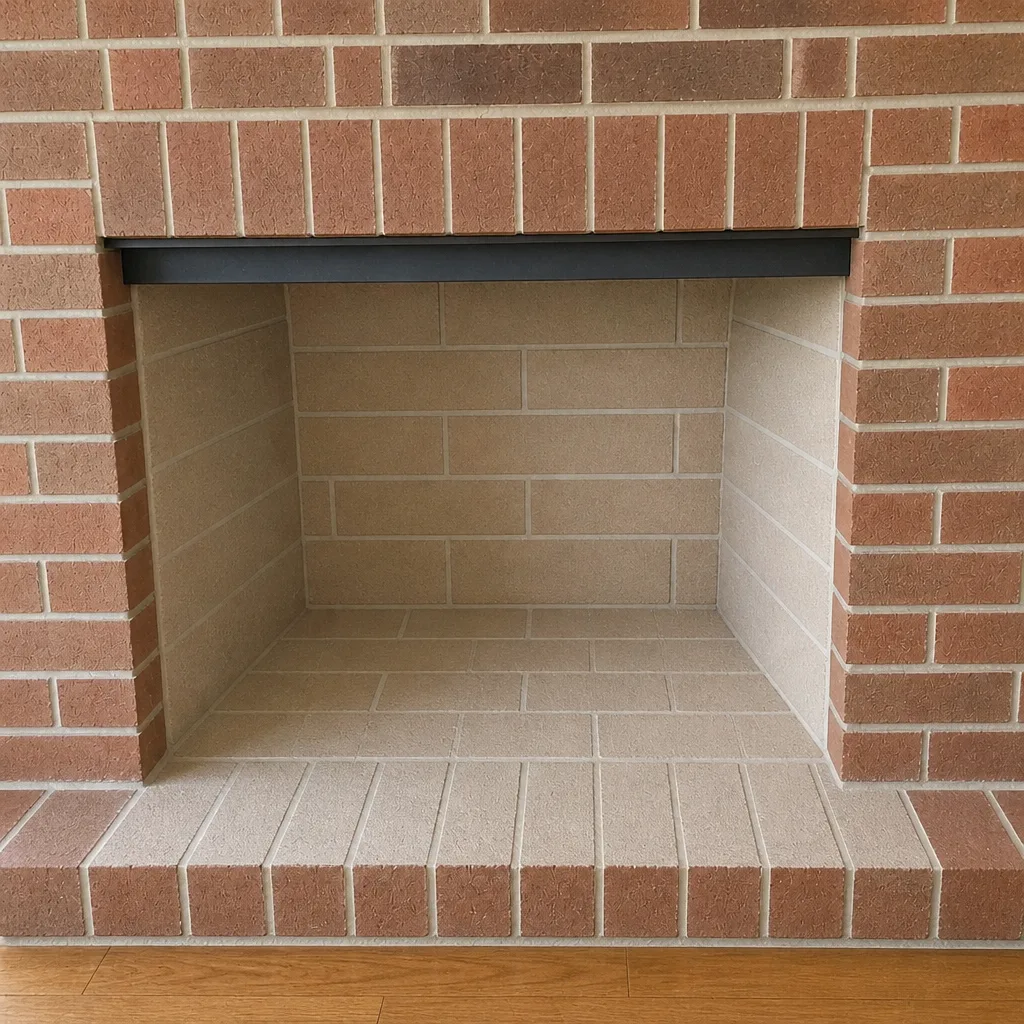
See the difference
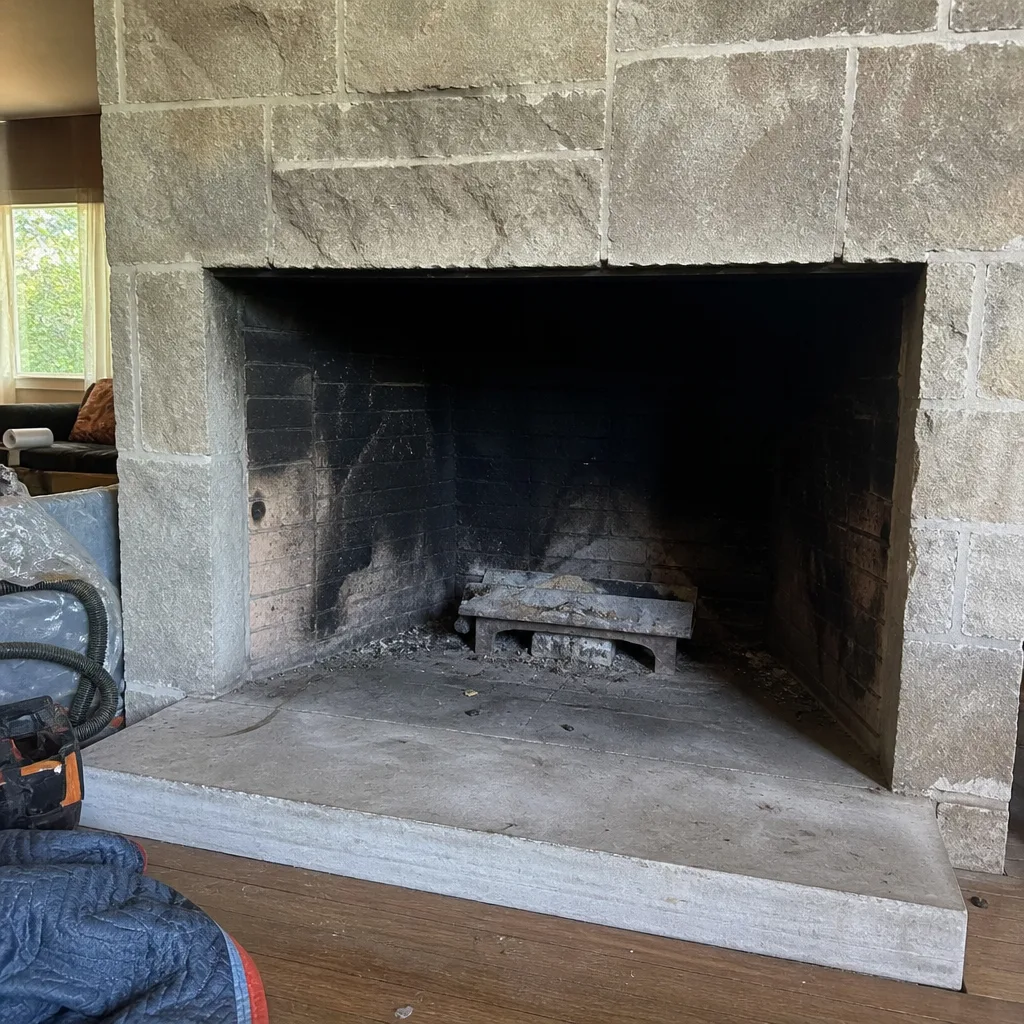 Before
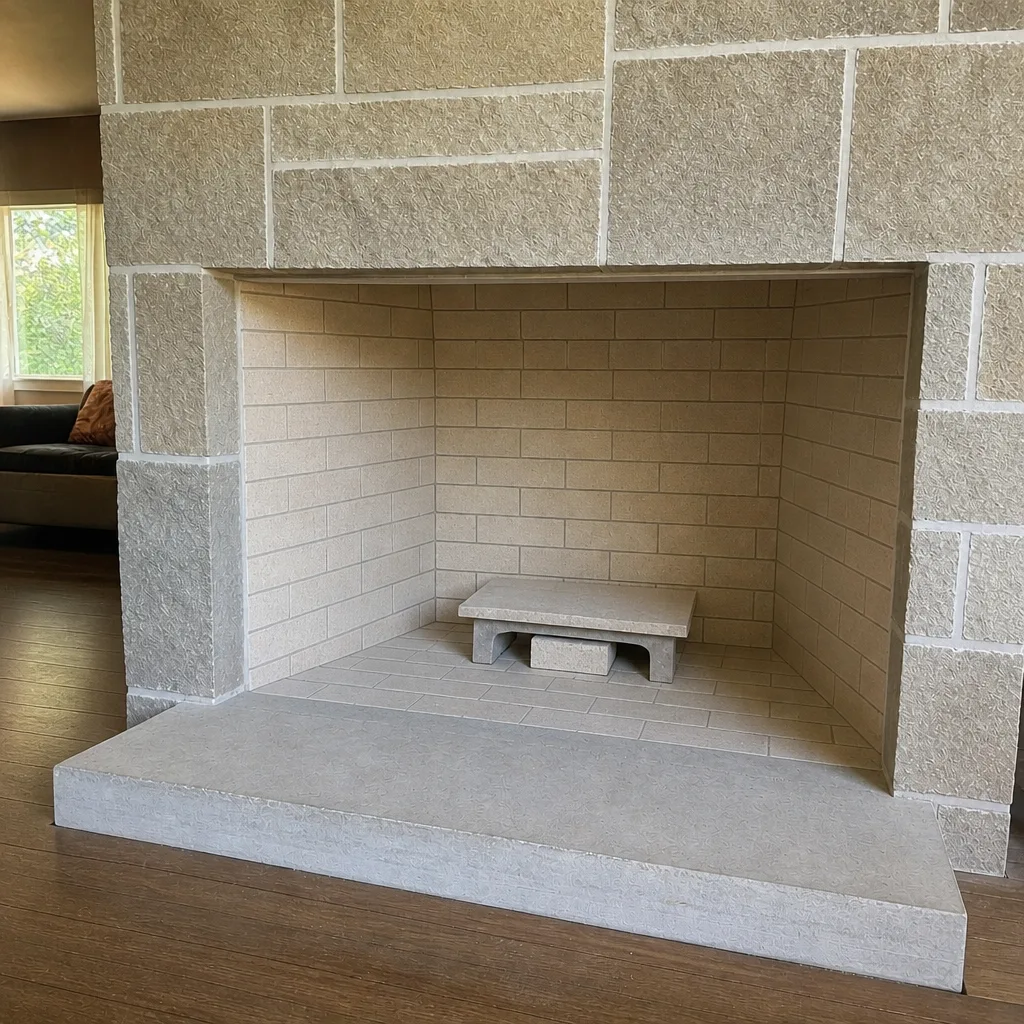 After
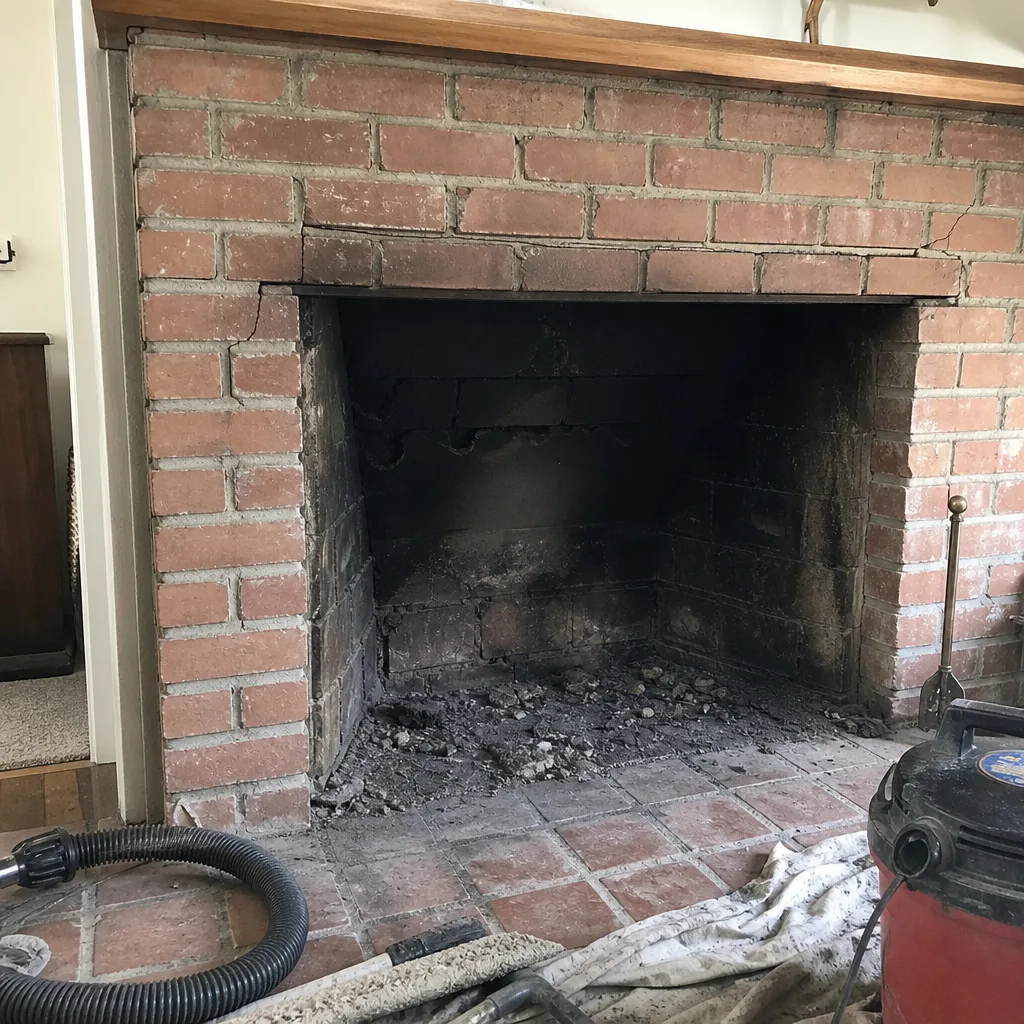 Before
 After
 Before
 After
When to Call a Professional
Call a professional chimney specialist when the question is “what’s inside my flue” rather than “how does the firebox look.” Any chimney with unknown service history, any liner that hasn’t been camera-inspected, any flue showing hard shiny deposits, any post-chimney-fire cleaning, any rental property, and any stove installation belong in that category. The line isn’t a warning label. It’s a straight read on where the diagnostic competence lives. Beyond cleaning, a full-service specialist handles the repair and protection side too, which matters because the sweep is the starting point and the structural work is often the point. Chimney Sweep Northwood offers free estimates in Northwood, and every recommendation comes with the camera evidence to back it up. Call (855) 337-2036 to schedule.
Frequently Asked Questions
For most Northwood homeowners burning an open fireplace, an annual sweep with a camera inspection is the working standard, and a biennial sweep is reasonable if the fireplace sees light use. Stoves and any system burning frequently should be swept annually. The right interval really depends on creosote staging rather than a fixed calendar: a light-use fireplace in good condition can go longer, and a heavily used stove shouldn’t stretch the interval. Call (855) 337-2036 for an exact quote for your chimney; estimates are free.
You can physically brush a flue without professional help, and you can safely remove firebox debris, check the cap and crown from the ground, and inspect the exterior masonry. What you can’t do without professional equipment is see the inside of the flue with a camera, judge creosote stage accurately, or detect a hairline liner crack. The physical cleaning is doable. The diagnosis that determines whether the cleaning was sufficient is not. Call (855) 337-2036 to schedule an inspection and find out what your flue actually looks like inside.
Glazed creosote is the fuel that chimney fires consume, and it ignites at a lower temperature than the wood in your firebox. The immediate risk is a chimney fire. The downstream risk is liner damage from that fire, which turns into liner resurfacing or full relining work. Skipping doesn’t typically fail dramatically. It fails when the conditions align on a cold evening. Call (855) 337-2036 for an inspection if you don’t know the creosote stage in your flue; estimates are free.
A chimney fire claim can be easier to handle with documented professional inspection and maintenance records. A self-performed cleaning leaves no paper trail, so the answer to “was this system professionally maintained” becomes your word against the adjuster’s assessment. We’re not giving insurance advice and policies vary, but a dated inspection report with camera footage is a document a brush kit can’t produce. Call (855) 337-2036 to schedule a documented sweep and inspection.
That question can only be answered with camera footage, and anyone who tells you one or the other without looking up the flue is guessing. A flue with a stage-two deposit may only need cleaning. A flue with cracked tiles or compromised joints needs repair, which may be liner resurfacing with HeatShield or a full reline. We don’t recommend either without showing you the evidence first, and we’ll tell you plainly when the work can safely wait. Call (855) 337-2036 for an estimate.
Three things: uniform rotary cleaning that removes crust and medium glaze a straight brush can’t touch, HEPA containment so the soot goes into a bag rather than your living room, and video inspection that shows liner condition and creosote stage at every height. The rotary head and the camera are the difference between cleaning and diagnosing. Call (855) 337-2036 to book a sweep with inspection, and you’ll see what your flue actually needs.
The Bottom Line
The DIY chimney cleaning question isn’t about whether you can run a brush up a flue. You can. It’s about whether you can recognize what the brush didn’t remove, or what it passed over without telling you. Stage-two creosote that’s heading for glaze, and a hairline liner crack, are both invisible to consumer equipment and to the person holding it. The homeowner who handles firebox debris, cap and crown checks, and exterior masonry inspection, and leaves flue cleaning and diagnosis to a professional, gets both: the useful DIY tasks and the diagnostic competence where it counts. If your Northwood chimney hasn’t seen a camera, start there. We handle the full chimney system rather than the sweep alone, from inspection and cleaning through fireplace repair, liner resurfacing, and cap and crown work. Contact Chimney Sweep Northwood at (855) 337-2036 for a free estimate. We answer 24/7. Fast dispatch from 7am to 7pm, Sunday through Friday. One call resolves the full chimney lifecycle: inspect, clean, repair, protect.
Written by the team at Chimney Sweep Northwood.